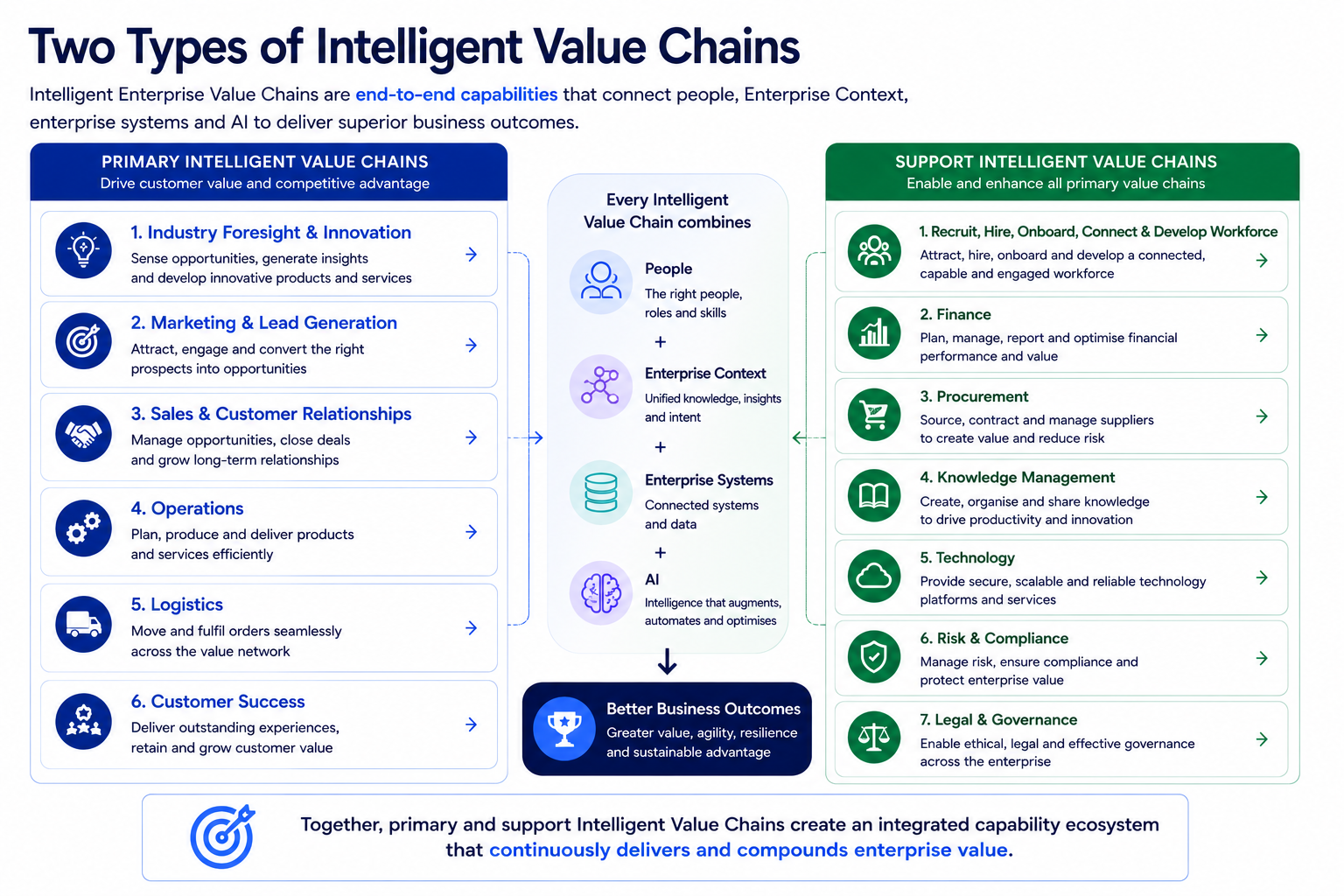
An infographic titled "Two Types of Intelligent Value Chains" comparing primary and support intelligent value chains, explaining their components and how they work together to deliver enterprise value.
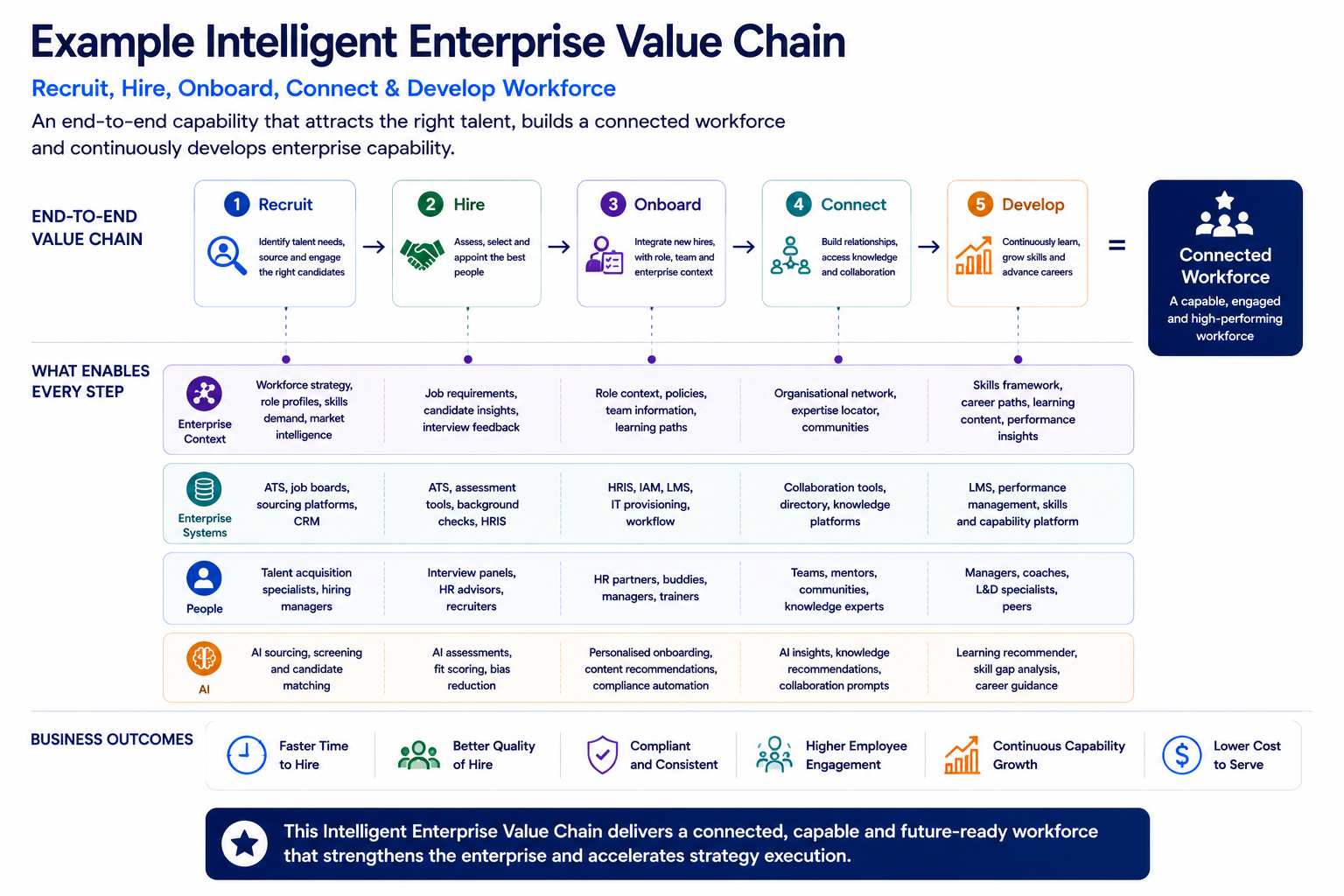
Infographic titled 'Example Intelligent Enterprise Value Chain' illustrating five steps: Recruit, Hire, Onboard, Connect, Develop. Each step includes bullet points about enabling factors like enterprise context, systems, people, and AI, as well as business outcomes such as faster time to hire, better quality of hire, compliance, higher employee engagement, continuous growth, and lower costs. The infographic emphasizes creating a connected, capable, and future-ready workforce.
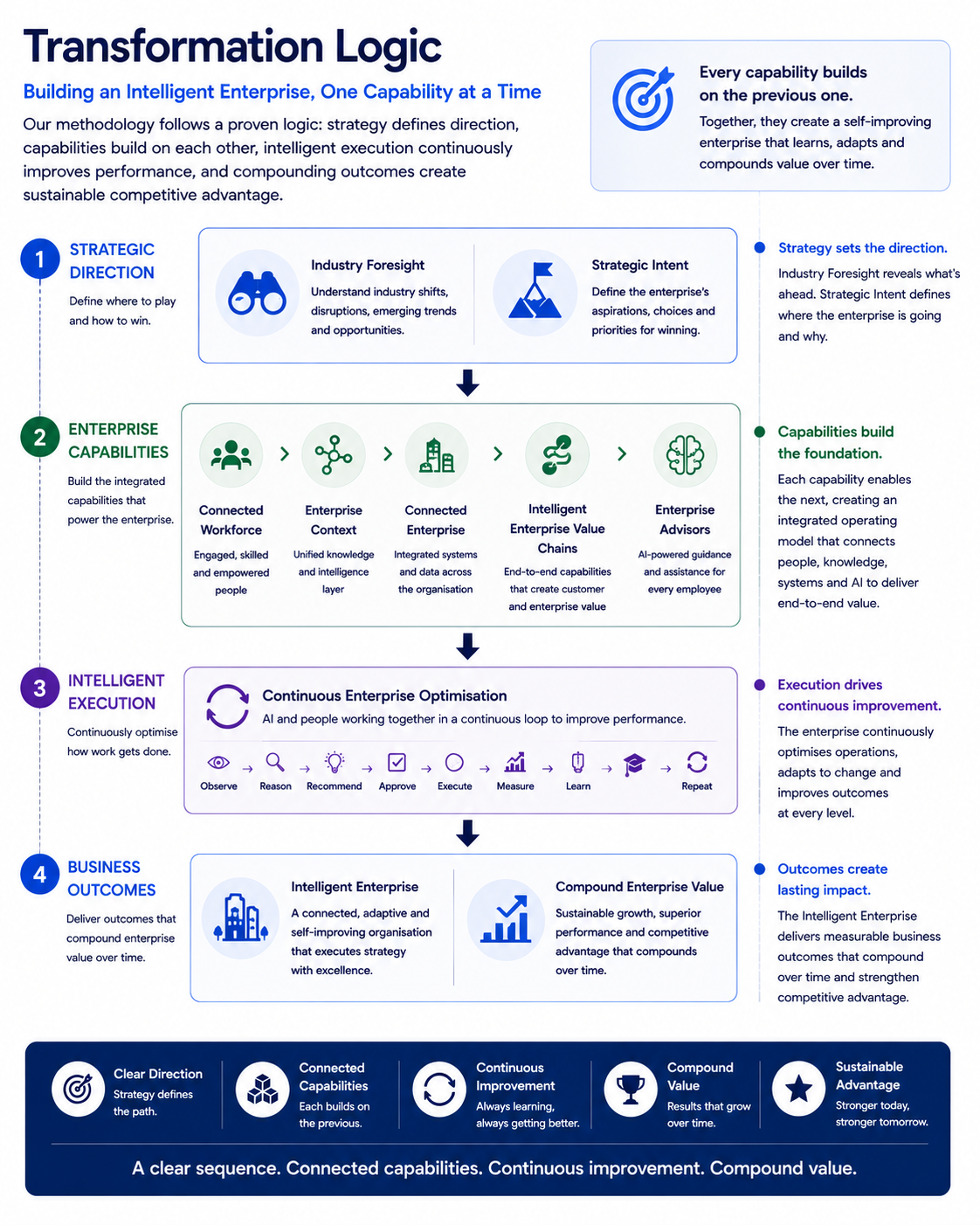
A detailed infographic titled 'Transformation Logic' outlines building an intelligent enterprise through four steps: strategic direction, enterprise capabilities, intelligent execution, and business outcomes. It includes icons and descriptions for each step, emphasizing connected capabilities, continuous improvement, and sustained value.
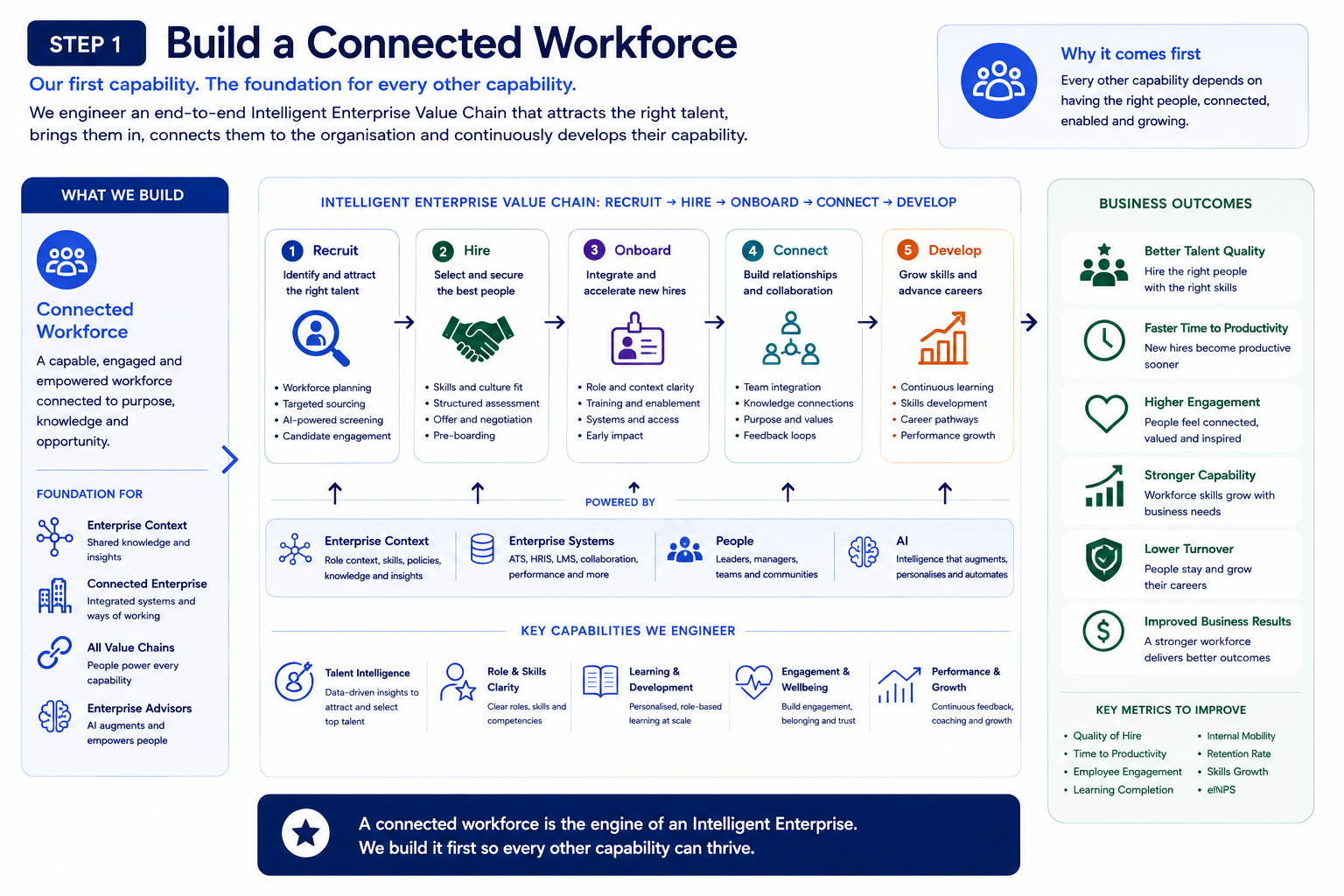
Overview of building a connected workforce in an enterprise, illustrating the steps of recruitment, hiring, onboarding, connecting, and developing talent, with columns for business outcomes and key capabilities needed.
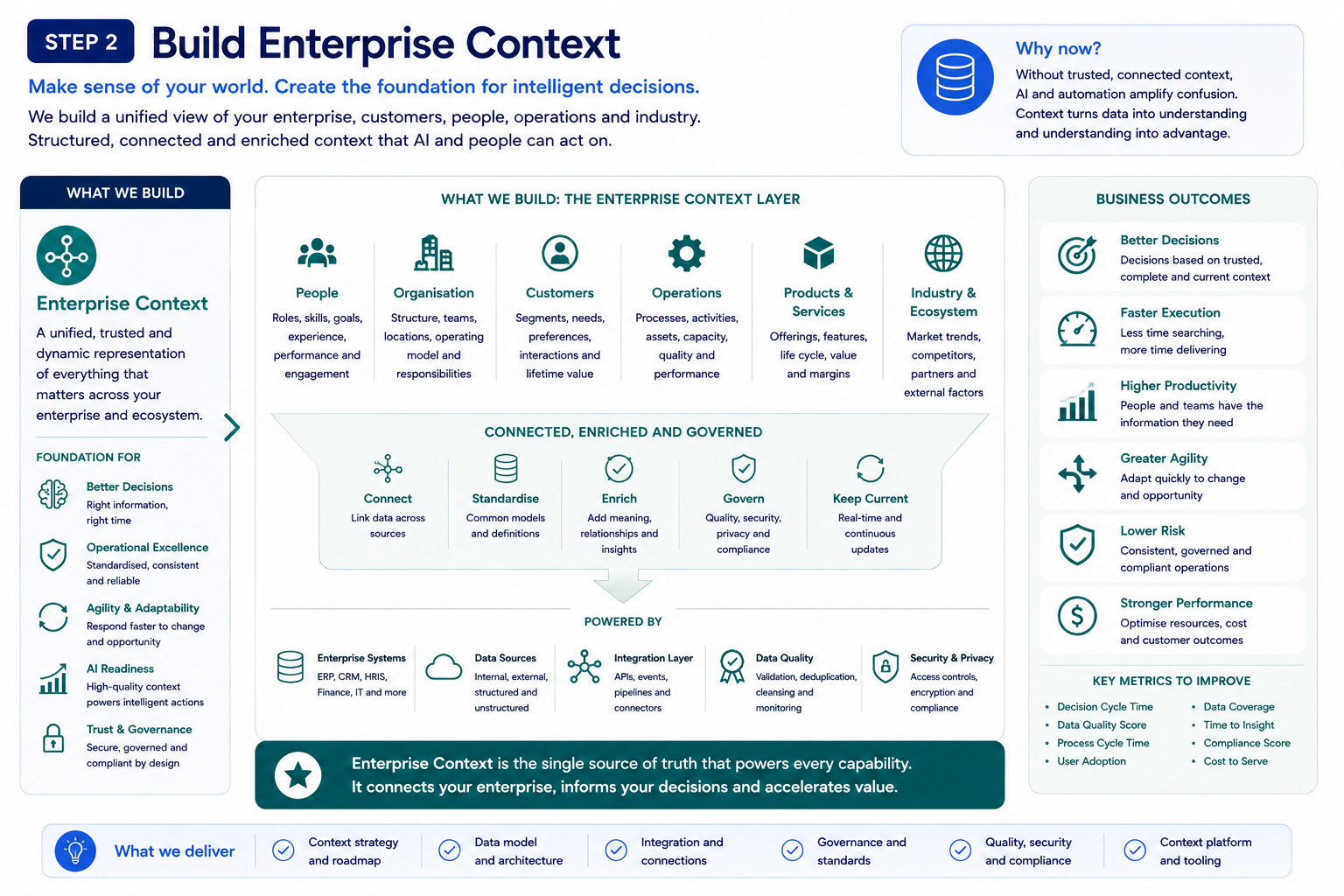
A detailed infographic explaining building enterprise context with sections for what we build (enterprise context, connected and enriched, governed), business outcomes, key metrics, and delivery components. It emphasizes trusted data, standardization, security, and decision-making.
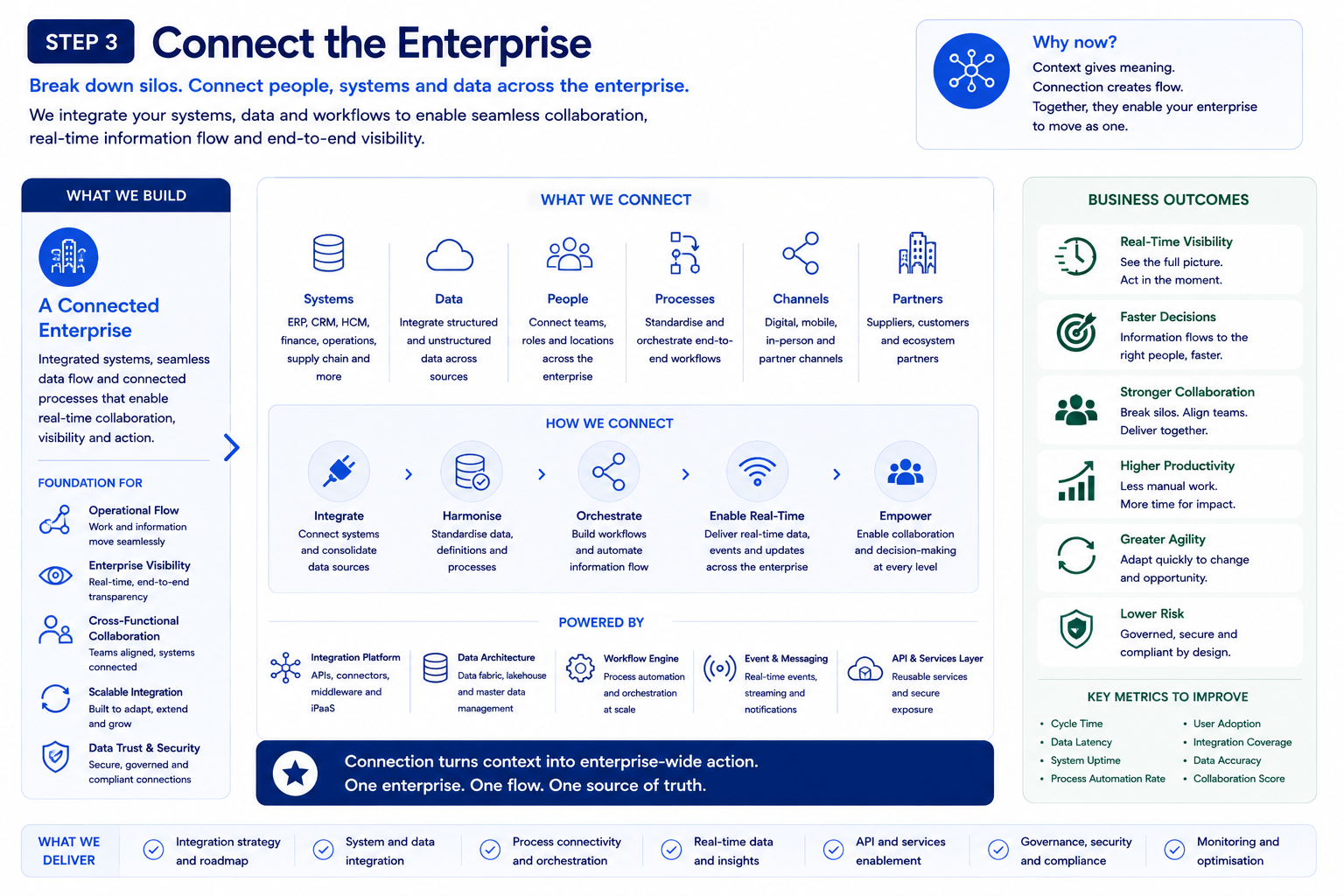
Step 3 of a process titled 'Connect the Enterprise' outlining integrating systems, data, people, processes, channels, and partners for real-time collaboration, visibility, and action. Highlights include operational flow, enterprise transparency, and strategic metrics.
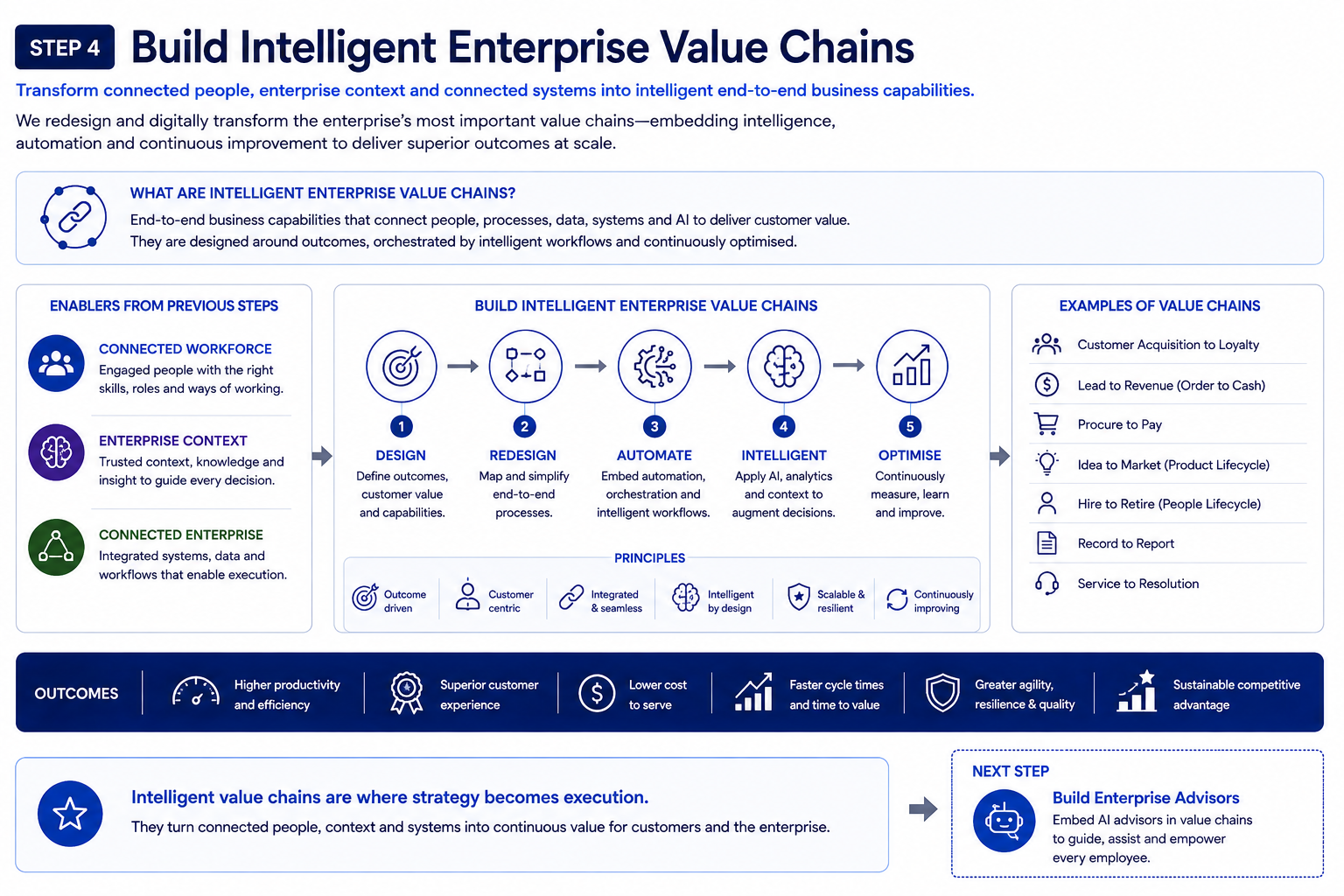
A business infographic titled 'Build Intelligent Enterprise Value Chains' outlining steps to transform connected systems into end-to-end business capabilities. It includes sections on enablers like connected workforce, enterprise context, and connected enterprise, and shows a five-step process: Design, Redesign, Automate, Intelligent, and Optimize. Principles such as being outcome driven and customer centric are listed. Examples of value chains are given, including customer acquisition to loyalty and lead to revenue. Outcomes include higher productivity, lower costs, and sustainability. A next step suggests building enterprise advisors with AI.
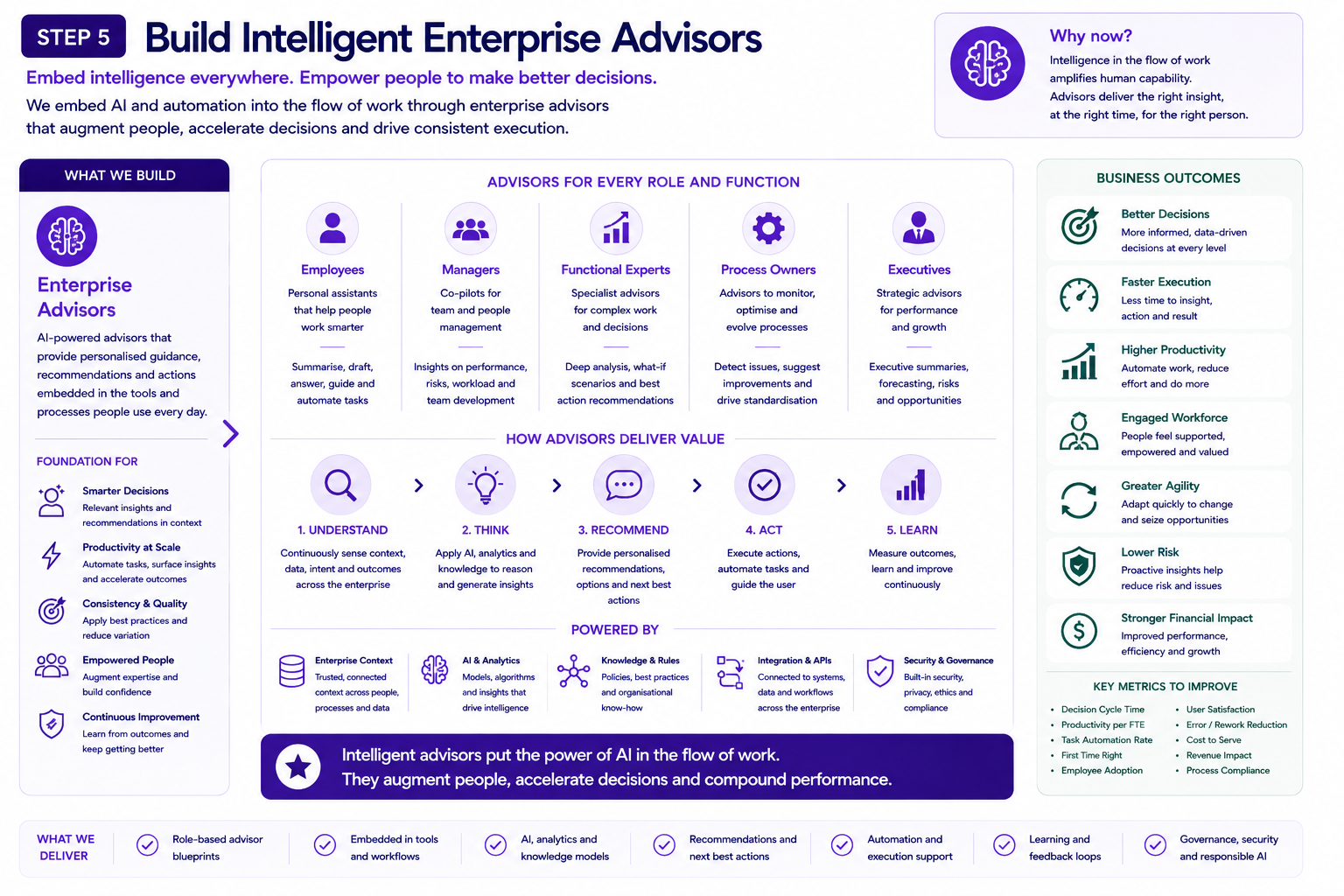
Infographic explaining how to build intelligent enterprise advisors through AI-powered tools. Features sections on roles for employees, managers, experts, process owners, and executives, with details on how advisors deliver value through understanding, thinking, recommending, acting, and learning. Includes benefits such as better decisions, faster execution, higher productivity, engaged workforce, greater agility, and lower risk, along with key metrics for improvement. Powered by enterprise context, AI and analytics, knowledge and rules, integration and APIs, security and governance.
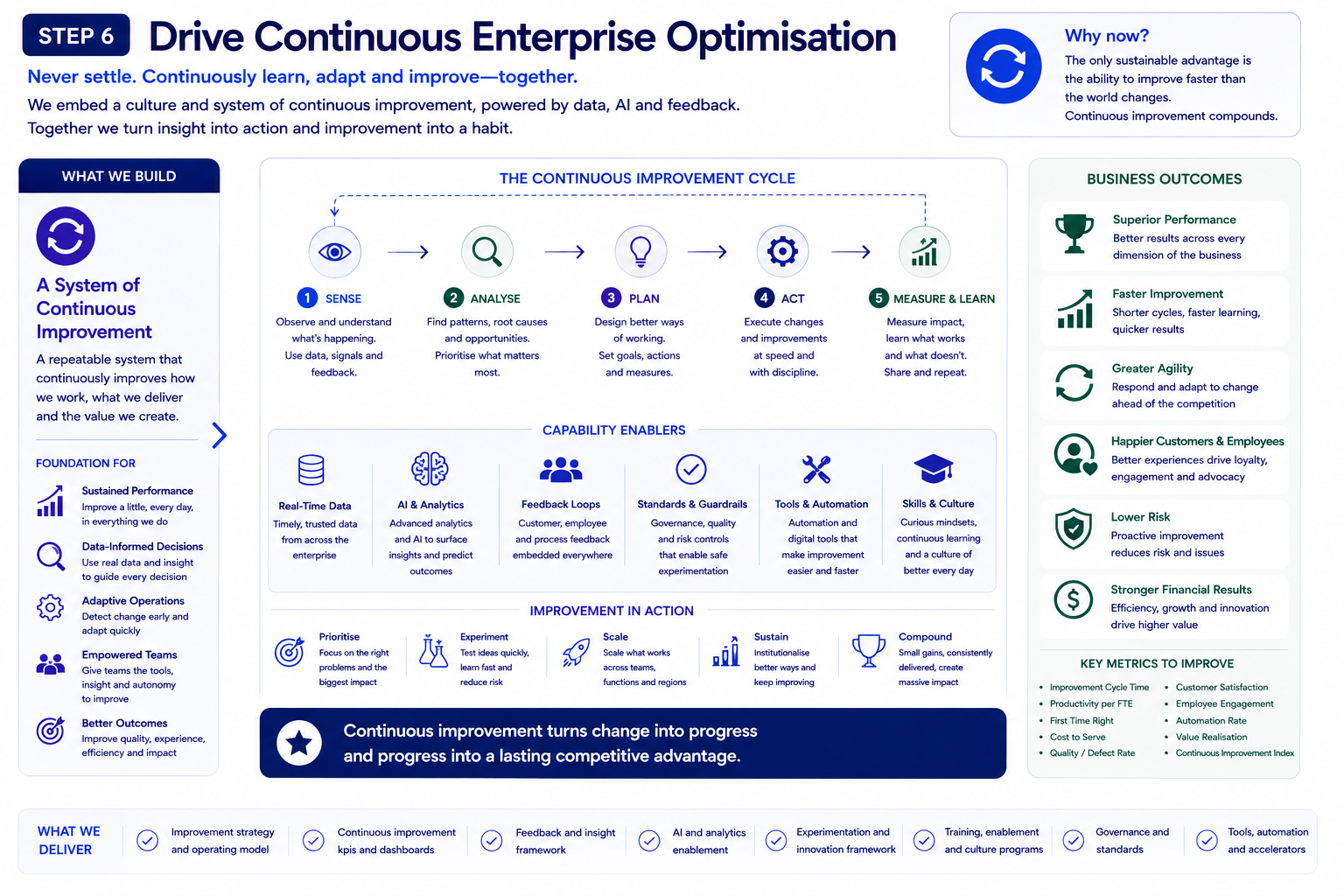
Infographic titled 'Drive Continuous Enterprise Optimization' outlining a continuous improvement cycle with five steps: sense, analyze, plan, act, measure & learn, along with capability enablers and expected business outcomes.
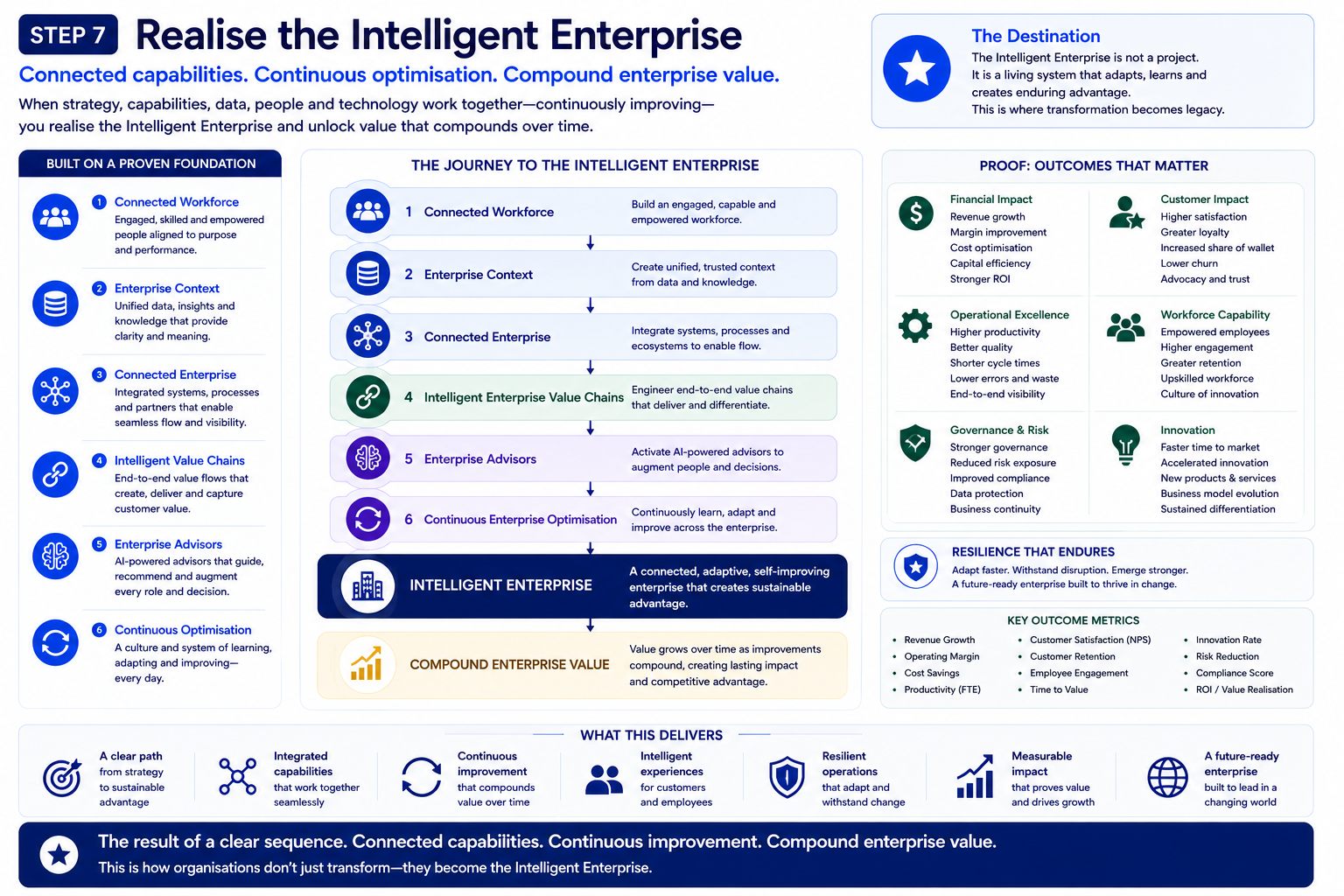
A detailed infographic explaining the steps to realize an intelligent enterprise. It highlights the importance of connected capabilities, continuous optimization, and compound enterprise value. Sections outline foundational concepts like connected workforce and enterprise context, the journey through connected enterprise, intelligent enterprise value chains, and advisors. Proof outcomes include financial impact, operational excellence, governance, risk, innovation, resilience, and key metrics like revenue growth and customer satisfaction. The bottom emphasizes the benefits of a clear, integrated, continuously improving, and resilient enterprise.